Overview
Hyele Ltd. builds technology to assess and manage Smart Urban Water Pipeline Systems (UWPS). Their Time Reversal diagnostics were world-class — but without a digital interface, operators could not run tests remotely, interpret results at scale, or monitor networks in real time. We designed and shipped the web platform that made that possible.
About the client
Founded in 2023 and headquartered in Hong Kong, Hyele Ltd. serves urban water and supply systems, sewage networks, and oil & gas operators. Infrastructure in these sectors faces blockages, corrosion, and undetected failures that drive safety risk and cost.
Hyele uses a physics-powered Time Reversal (TR) approach to detect pipe defects with high accuracy — improving sustainability, efficiency, and resilience. Their next step was a digital product that could carry that precision into day-to-day operations.
Their challenges
Hyele’s TR-powered diagnostic system finds pipe defects with water-borne signals. The hard part was making that process simple, remote, and scalable across cities, plants, and underground networks.
- 01
No centralized digital platform
Pipeline testing was heavily manual and needed technical oversight. Without a digital interface they could not monitor tests remotely, trigger tests from elsewhere, interpret results, or access insights in real time.
- 02
Complex user experience
Clients in oil & gas, urban water, and sewage needed a platform that broke complex simulations into workflows any analyst or technician could run — not only specialists.
- 03
Scalability constraints
Without a digital product, Hyele struggled to serve multiple clients and package offerings consistently across industries.
- 04
Manual workflows
Missing embedded workflows meant field visits and reactive maintenance — higher cost, more downtime, slower diagnosis.
Our solutions
We turned Hyele’s diagnostic systems into a scalable, real-time web platform — digitizing core workflows so infrastructure teams can monitor, diagnose, and prevent failures without living in the field.
User-friendly operator interface
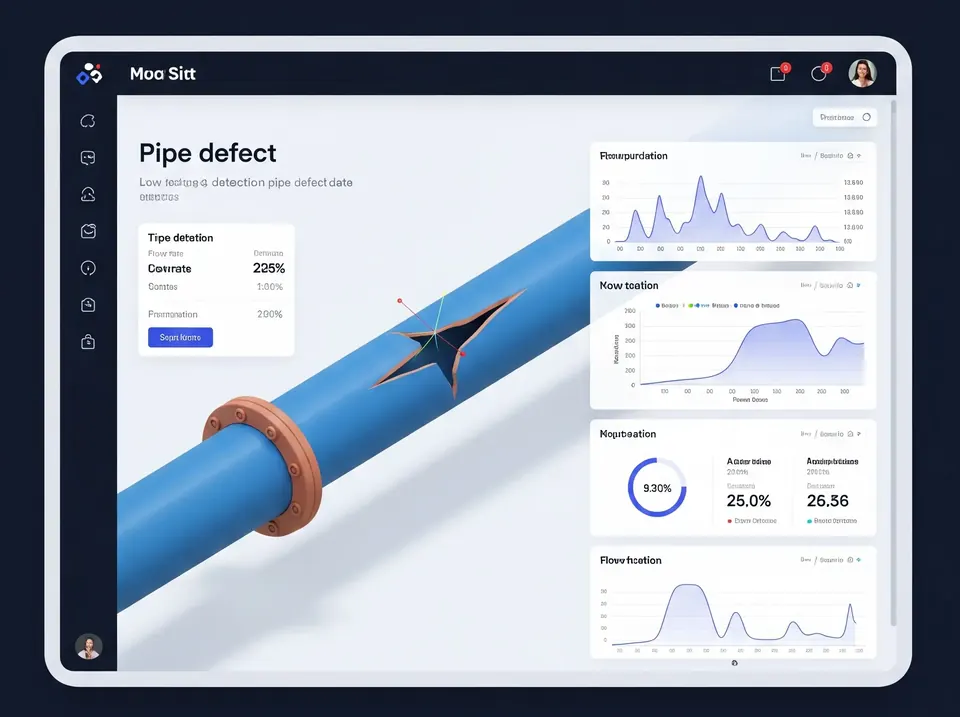
A modern web UI for analysts, technicians, and engineers to run active and passive pipeline tests remotely, watch system health live, and generate reports in one click.
Advanced simulation workflows
Digital workflows that model pipe behaviour under different stress and flow conditions, automate repeated test routines, and help predict failures earlier.
Real-time monitoring dashboard
Live dashboards tracking pipeline status across sites with alerts for pressure drops, blockages, leaks, and other anomalies — proactive diagnostics before issues escalate.
Flexible service models
Platform support for one-off condition assessments, term-based monitoring, and long-term technology partnerships — so Hyele can sell and scale packages without custom rebuilds each time.
Technology stack
The technology we used
- Angular
- Operator UI with tailored dashboards and visualization components.
- Spring Boot
- Backend services for processing, orchestration, and data workflows.
- PostgreSQL
- Structured storage for tests, assets, and reporting data.
- Node.js
- API integrations and device data synchronization for live monitoring.
- Huawei Cloud
- Scalable cloud hosting for access, security, and performance.
- CI/CD
- Automated deployment for frequent, safe releases.
Key features built
What we delivered
| Capability | What we built |
|---|---|
| Embedded modelling system | Interactive modules that simulate pipe behaviour under different stress levels or flow conditions. |
| Embedded simulation workflow | Digital workflows that automate and replay test cases remotely. |
| Passive & active testing | Real-time testing dashboards to find, track, and analyse results. |
| Real-time monitoring | Live alerts, system status, and anomaly views across pipeline networks. |
Conclusion
We helped Hyele move from a high-tech diagnostics provider to an intuitive platform that infrastructure teams can use to monitor, diagnose, and prevent failures in real time.
Whether you run urban water, oil & gas pipelines, or complex sewage networks — precision, scalable digital control, and live visibility are no longer optional.